 Tony Passwater
SBA Relief Loans & Employee Tax Deferrals
Navigating Retrospective Audits, FFCRA Credits, and Long-Term SBA Compliance
This month’s QuickBooks Tips & Tricks focuses on managing federal tax compliance programs, navigating retrospective audits, and ensuring your current bookkeeping files match historical regulatory standards.
We know the evolving landscape of tax legislation and payroll regulations has changed how you manage your corporate books. Below, we provide an overview of how historical payroll deferrals, Families First Coronavirus Response Act (FFCRA) credits, and SBA disaster relief loans continue to impact your business operations today.
Retrospective Payroll Tax Deferrals
The historical employee payroll tax deferment programs left many business owners with complex compliance questions. Because these deferrals were structured as temporary payment delays rather than permanent tax exemptions, they have become a major focal point for retrospective IRS compliance audits.
If your business chose to defer social security withholding during the allowable relief windows, verifying that these deferred taxes were properly recorded and repaid is essential to avoiding unexpected IRS penalties.
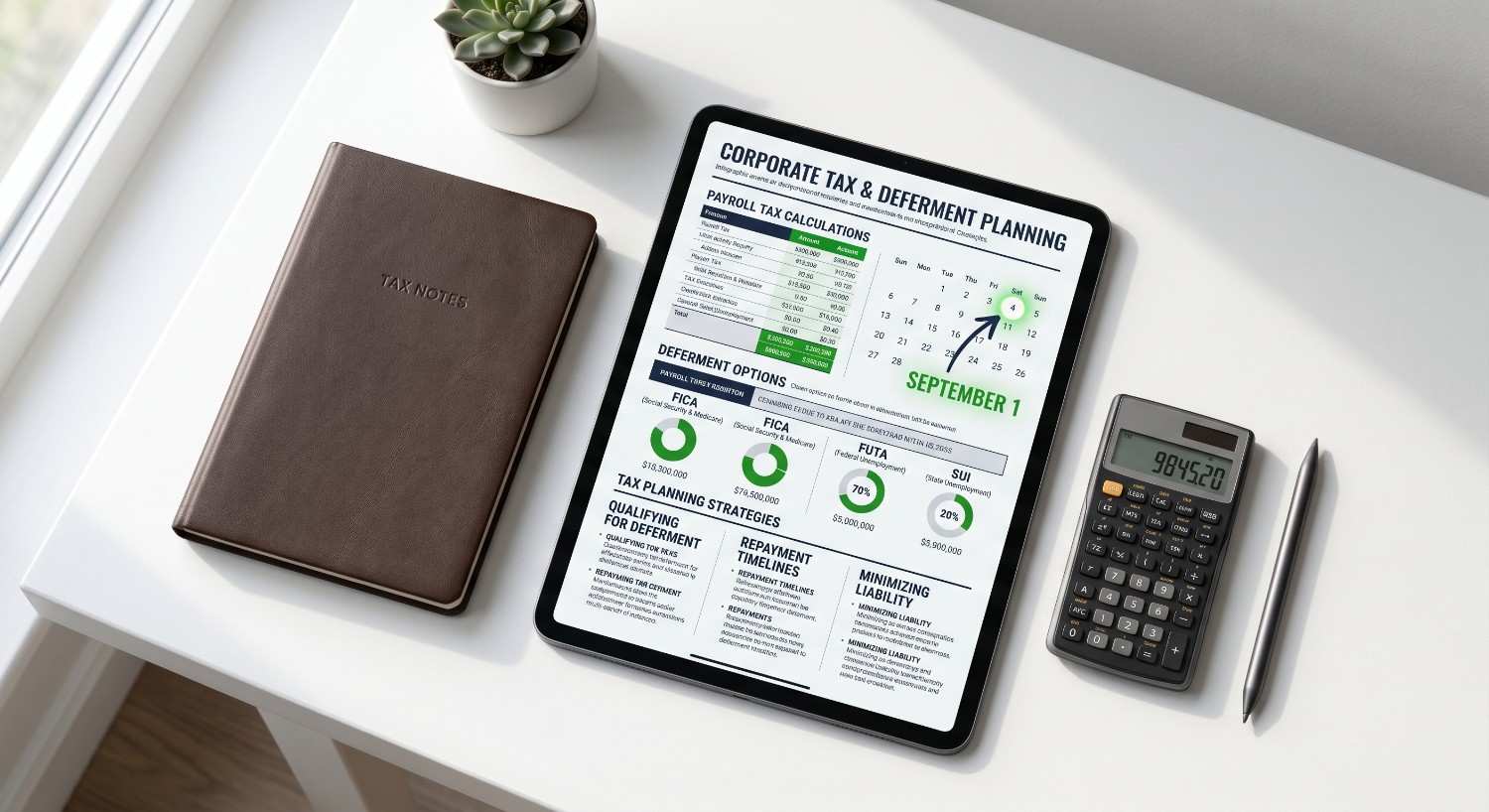
Understanding Your Current Tax Base Limits (2026):
To put historical payroll tax percentages into perspective, review the current standard limits:
The Withholding Rate: Employees pay a `$6.2\%$` Social Security tax on wages up to the indexed annual taxable wage limit.
Modern Wage Base Limits: For the 2026 tax year, the Social Security wage base limit is `$184,500`. This means an employee earning at or above this limit will contribute a maximum of `$11,439.00` in Social Security taxes, matched equally by the employer.
Medicare Tax: Unlike Social Security, Medicare withholding has no wage cap and is not subject to standard deferment memorandums.
Financial Standing: If your business is in good financial standing, utilizing tax deferrals is generally discouraged because it creates future liabilities with zero opportunity for forgiveness.
FFCRA Paid Leave & Credit Audits
The Families First Coronavirus Response Act (FFCRA) required employers to provide employees with paid sick leave or expanded family and medical leave for specified health and family care issues. While this program provided robust tax credits to offset the costs of paid leave, it has also become a major source of accounting errors.
Because many payroll programs were not updated quickly enough when the FFCRA was passed, many businesses experienced calculation errors on their quarterly Federal Form 941 filings.
Retrospective audits of FFCRA tax credits are highly active. If your business claimed these credits, ensuring that your QuickBooks entries precisely match your payroll records is critical to passing an IRS review. You can review the underlying federal FFCRA guidelines below to confirm your historical compliance:
Retrospective PPP Loan Compliance
If your business received a Paycheck Protection Program (PPP) loan, it is critical to realize that receiving forgiveness from your lender is not the final step. Under federal guidelines, the SBA retains the legal authority to audit and verify PPP loan records for up to `$6\text{ years}$` after the date the loan is forgiven or fully repaid.
This means that for many small businesses, active audit windows remain open. During a retrospective audit, the SBA can review your original payroll data, full-time equivalent (FTE) employee calculations, and use of funds over the `$8\text{-week}$` or `$24\text{-week}$` covered periods.
To review the exact documentation requirements and calculation standards used for loan forgiveness, click below:
⚠️ Tax Deductibility and State Treatment
Under federal tax law, forgiven PPP loan amounts are excluded from gross income. However, the state-level tax treatment of forgiven funds varies significantly. Many states do not conform to federal guidelines and treat forgiven loans as taxable business income, increasing your state tax liability.
Additionally, the IRS has established specific rules regarding the deductibility of payroll and business expenses paid for with forgiven PPP proceeds. To ensure you have documented these expenses correctly on your federal returns, review the official IRS guidelines below:
EIDL Repayment & Compliance
Another unprecedented program rolled out by the Small Business Administration is the Economic Injury Disaster Loan (EIDL). Unlike the PPP, the EIDL is a true low-interest loan that is not designed to be forgiven.
Because EIDL terms feature a `$30\text{-year}$` amortization schedule, maintaining long-term financial records of your loan compliance is essential. The SBA restricts how EIDL funds can be used (specifically prohibiting owner distributions, refinancing other debts, or business expansion), and they require borrowers to maintain detailed receipts and financial records of all EIDL expenditures.
As EIDL repayments remain active, verifying your business remains in compliance with these strict SBA covenants is critical to avoiding loan default or federal penalties. Review the official SBA criteria below:
Video Guide: SBA EIDL Loan Processes Explained
Need Help Preparing for a Retrospective SBA or IRS Audit?
Our team at AEII, QuickBooks R Us, specializes in helping collision repair shops and small businesses organize their general ledgers, reconstruct payroll records, and secure audit-proof financial files. Let us help you align your systems and protect your business.
📅 Book Your Session Now
Free 30-Min Consultation • No Obligation
We have a large library of helpful QuickBooks Tips & Tricks, you can catch up on past issues by Clicking Here.
We also have a free self-help site with helpful procedures and videos at: QbHelp.us
Thank you, and I look forward to sharing more small business and QuickBooks Tips and Tricks with you in the future…